Grief Without A Grave
There are deaths more terrifying than physical death.
People used to understand this.
Ancient religions hinted at it. Novelists wrote about it constantly. Dostoevsky seemed obsessed with it, not because he loved suffering, but because he understood that a human being can continue breathing long after something essential inside them has collapsed.
I know because I've been living beside that collapse for years.
Not days.
Not months.
Years.
The strange thing is that it doesn't arrive dramatically.
There is no thunderclap moment.
No cinematic breakdown.
No clear dividing line between who you were and who you became.
It happens through erosion.
A little piece of you disappears.
Then another.
Then another.
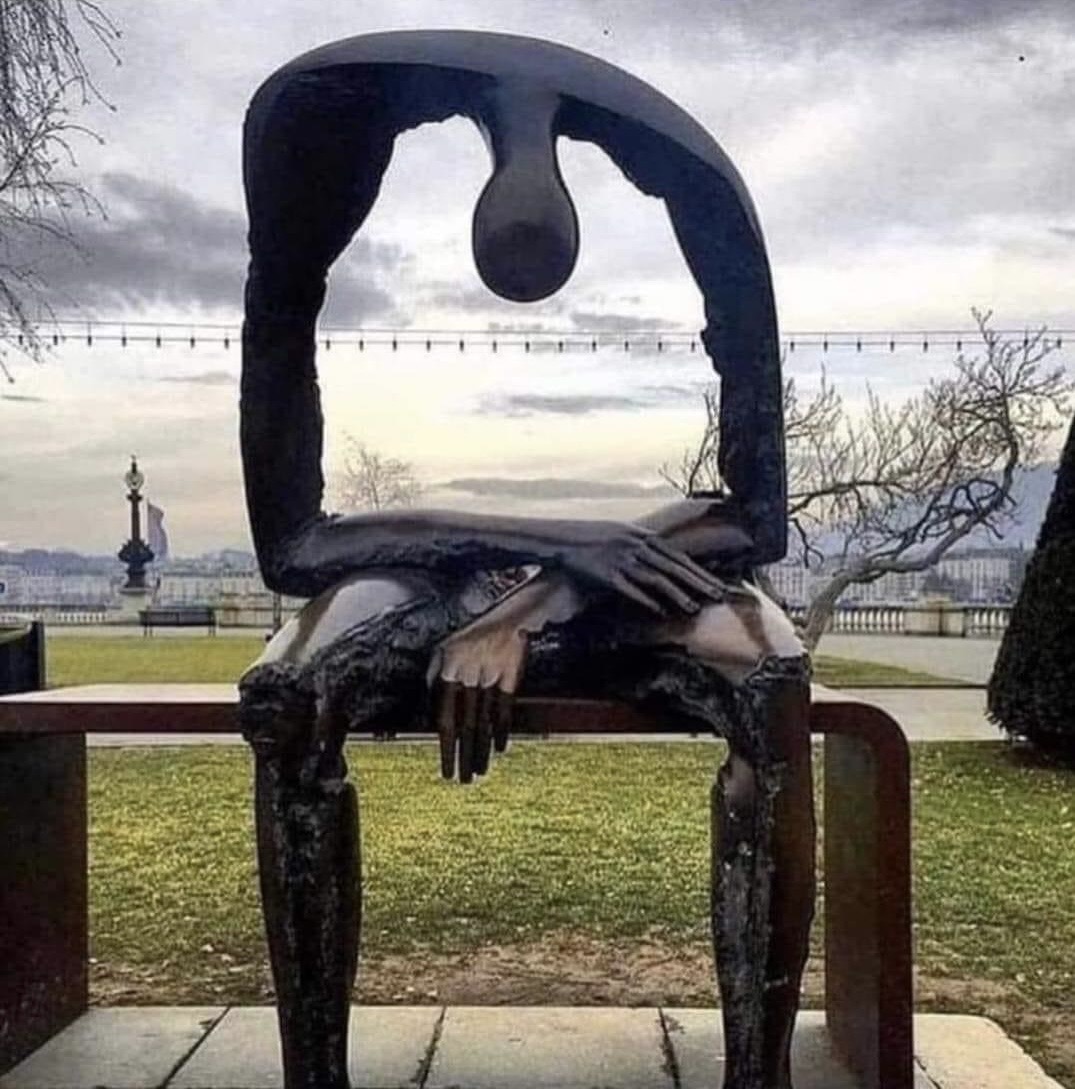
Until one day you realize you're still alive, but you no longer feel fully present in your own life.
Ten years ago, my ex left.
At the time, I thought that pain would be the thing that finally broke me.
I was wrong.
Heartbreak hurts. It can level a person. But eventually you learn how to carry it.
You don't get over it.
You carry it.
The heavier burden came later.
My daughter is ten years old.
I haven't seen her in roughly eighteen months.
And every month that passes feels like another small funeral nobody else attends.
People hear eighteen months and think of time.
I think of childhood.
I think of birthdays.
Christmas mornings.
Random Tuesday afternoons.
The ordinary moments that seem meaningless until they're gone forever.
Eighteen months isn't a period of time.
It's a portion of her life.
A portion of our life.
Gone.
Sometimes I sit and wonder what her voice sounds like now.
Has it changed?
Does she still laugh the same way?
What music does she like?
What shows does she watch?
What dreams is she beginning to have?
I don't know.
A father should know those things.
Not because he's entitled to them.
Because he loves his child.
Because he wants to be there.
Because that's where his heart lives.
What makes it worse is that this isn't even the first time.
Years ago I went through something painfully similar involving my first two daughters.
I survived it.
At least that's what everyone said.
I kept going.
I showed up for work.
Paid bills.
Made jokes.
Smiled when appropriate.
Did what men are taught to do.
Carry the weight.
Silently.
But surviving something doesn't mean it didn't damage you.
Some wounds don't heal.
They simply become part of the structure holding you together.
Then life strikes the exact same place again.
And suddenly all the old fractures reopen.
That is where I find myself now.
People talk about loneliness.
This feels different.
Loneliness is being alone.
This is feeling exiled.
You watch other people move naturally through life while privately feeling separated from the world by invisible glass.
You see fathers with daughters in grocery stores.
At restaurants.
At school events.
You aren't jealous of them.
You're grieving for yourself.
And for her.
Because neither of you get those moments back.
The body keeps score of these things.
People think suffering is psychological.
Some of it is.
But some of it settles into the nervous system itself.
The exhaustion becomes physical.
The sadness becomes physical.
The waiting becomes physical.
You wake up carrying it.
You go to sleep carrying it.
And after enough years something changes.
Consciousness itself begins to feel heavy.
Not because you want to die.
That distinction matters.
People misunderstand that.
The desire is rarely death.
The desire is relief.
The desire is one day without carrying the same grief.
One hour without replaying the same questions.
One night without wondering what you're missing.
Where is she today?
Is she happy?
Does she think about me?
Does she know I never stopped loving her?
Does she know I never stopped fighting for her?
The questions never end because there are no answers.
That's what makes this kind of loss so cruel.
Death has rituals.
Death has sympathy.
Death has certainty.
This has none of those things.
The person you love is still alive.
They're still in the world.
You just can't reach them.
It's a grief without a grave.
A mourning without a funeral.
A wound without closure.
And some days I find myself asking a question I never thought I'd ask.
How much can one man really take?
Not as a complaint.
Not as self-pity.
As an honest question.
How many years of separation?
How many missed memories?
How many pieces of yourself can be carved away before something fundamental finally gives out?
I don't know.
Maybe nobody does.
What I do know is that despite everything, something stubborn remains alive.
Not happiness.
Not optimism.
Something deeper.
A refusal.
A refusal to stop loving my daughters.
A refusal to surrender meaning completely.
A refusal to let bitterness become my final language.
Maybe that's why I write.
Because writing is one of the few things that still feels real.
Words become messages lowered into darkness.
Evidence that I was here.
Evidence that I loved.
Evidence that despite everything, I kept going.
Maybe that's the task in the end.
To take suffering that would otherwise consume a person and transform it into something that can be carried.
To give pain a voice before it turns into silence.
Because every day I feel something in me die a little more each day.
That much is true.
But every day the love survives too.
And for now, that's enough to keep me breathing.
Comments
Post a Comment